
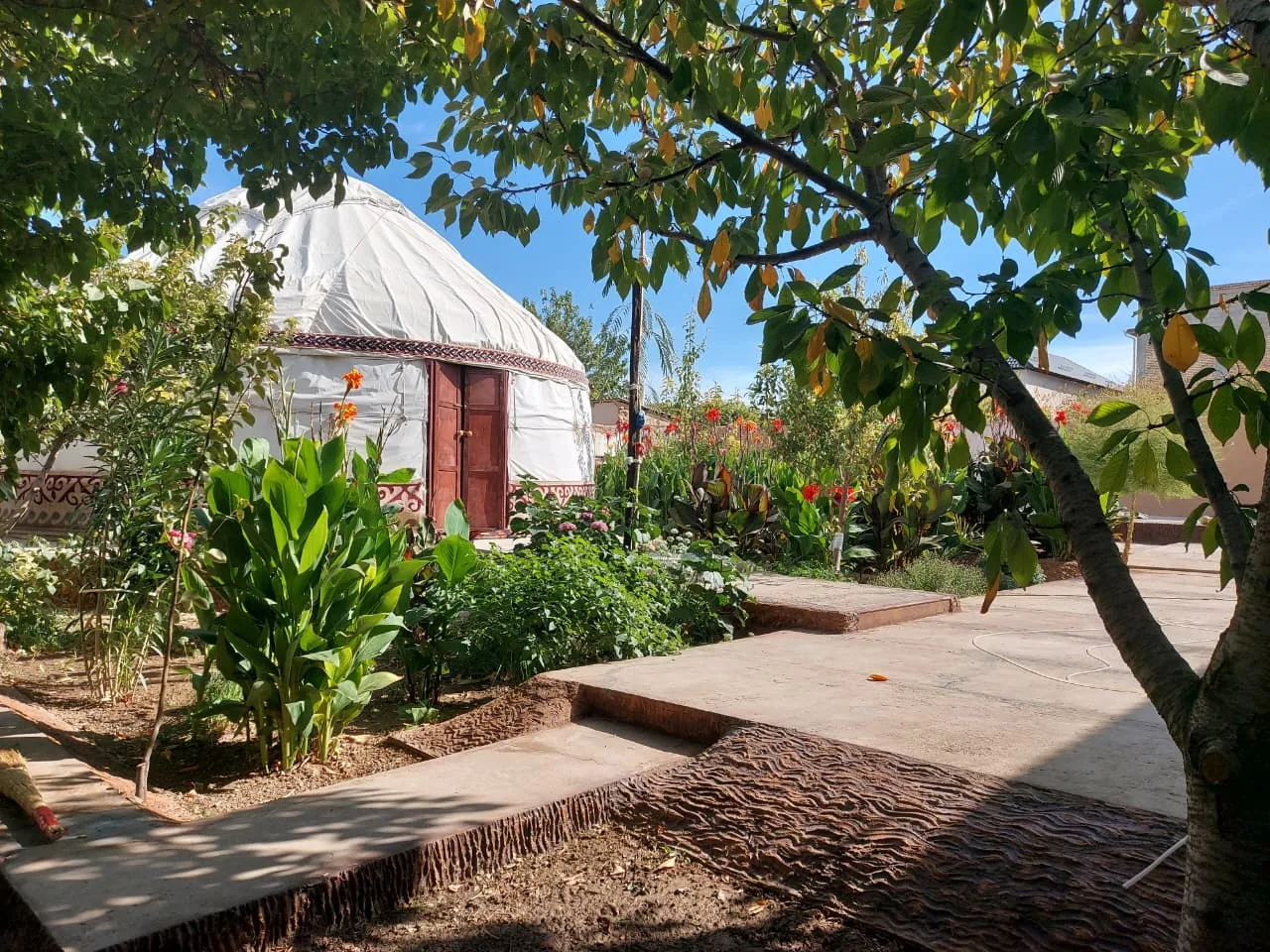
Caption: Gaukharbek Kunkhozhayev’s yurt, Turkistan
Photo: Kristoffer Bübeck, Turkistan, Kazakhstan, 2025
ATLAS & NATION STORIES
Felt, Fabric and the Yurt: The Soft Architecture of Kazakh Life
In this story
Step inside a Kazakh yurt and the first thing you notice is not the frame.
It is the softness.
Felt underfoot.
Patterned walls.
Woven bands above.
Colour moving across every surface.
A round room held together by wood, wool, fabric, ornament and memory.
From outside, the yurt may look simple: a portable shelter, practical and temporary. Inside, it becomes more layered. The wooden frame provides the structure, but textiles shape the atmosphere. Felt insulates. Carpets define places to sit and gather. Embroidered hangings soften the walls. Woven bands help hold the structure together and draw the eye upward.
The yurt works because of engineering. It becomes a home through the materials, skill and care invested in its interior.
This is why the yurt is more than architecture. It is soft architecture.
The yurt as a designed interior
The Kazakh yurt, commonly called a kiiz üy, can be understood as a felt-covered house. Its wooden framework allows it to be assembled, taken apart and moved. A lattice wall, roof poles and the roof ring, or shanyrak, form its portable wooden framework.
The materials that cover and dress this framework are just as important as the wood beneath. The felt helps keep out the elements. Floor coverings provide warmth and comfort. Decorative bands, embroidered hangings, bedding and storage textiles help organise the circular room.
Scholar German Kim’s 2024 study of ornamental weaving examines the baskur, a long woven band associated with the Kazakh yurt, showing why it should be understood in both practical and aesthetic terms (Kim, 2024).
Looking closely at a yurt means asking what each textile does. Is it covering a structural element, defining a domestic space, supporting or securing something, or celebrating the skill of its maker? Often, it does more than one of these things.
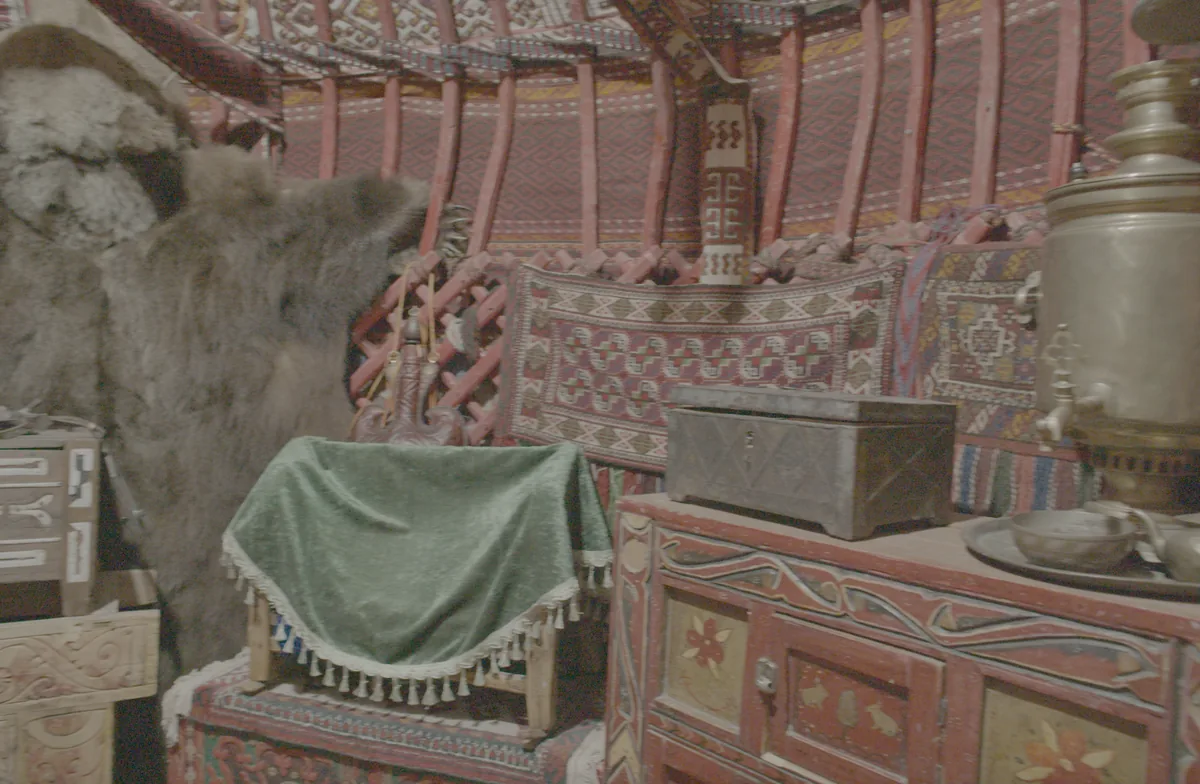
Caption: Berik Alibai House Museum, yurt
Photo: Kristoffer Bübeck, Astana, Kazakhstan, 2025
From wool to felt
Felt is a remarkable material for a movable home. Wool fibres can be brought together into a dense, flexible sheet through moisture, friction, pressure and handling. The result can be warm, durable and adaptable, suitable for coverings, floor textiles and smaller domestic objects.
Traditional wet-felting is physical work. Wool is prepared, laid out, wetted, worked and dried. Size, thickness and intended purpose influence the process. Ornament may be built into the material or developed through cutting, joining and stitching.
This is why looking at a felt carpet is also a way of looking at labour. Someone has handled the fibre, balanced its colours, worked its edges and made decisions about how the object will be used.
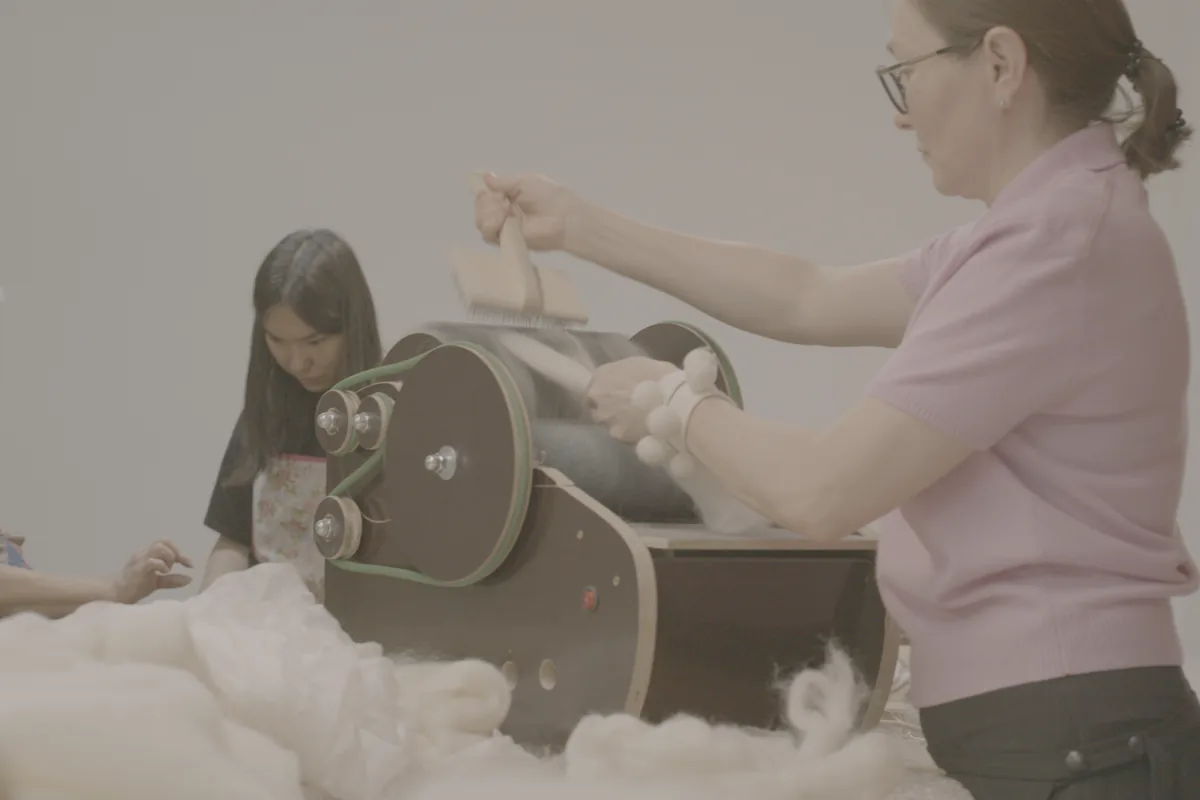
Caption: Kamilya Suleimenova, fashion designer
Photo: Kristoffer Bübeck, Astana, Kazakhstan, 2025
Tekemet and syrmak: two approaches to a felt floor
A yurt floor can tell you a great deal about textile technique. Two important types of Kazakh felt floor covering are tekemet and syrmak.
In a tekemet, coloured wool is commonly incorporated during felting, allowing pattern and background to develop together. The transition between colours may appear softer because fibres interlock as the surface is worked.
Syrmak often achieves a crisper graphic effect through contrasting pieces of felt, cut, arranged and joined to create defined shapes. In mosaic-style examples, the positive and negative spaces work together: a shape can be read as a motif, while the surrounding field becomes part of the design.
Techniques vary between makers, regions and individual objects (Zhukenova et al., 2016).
Put side by side, tekemet and syrmak illustrate a larger principle: ornament is affected by how an object is made. Material and method shape the visual language.
See how tekemet and syrmaq are made
Walls that hold memory: tus kiiz
The yurt’s walls may also carry textile work. Among Kazakh communities in western Mongolia, anthropologist Anna Portisch recorded embroidered wall hangings called tus kiiz, which helped dress the lattice walls of summertime yurts (Portisch, 2009).
Portisch describes textiles shaped by household life, skill and individual choice. The hangings may feature stylised animals and plants, repeated forms and richly worked surfaces. Some required prolonged effort; family members sometimes contributed to a single embroidery, making the finished piece a record of more than one pair of hands.
These textiles are not simply an abstract collection of motifs. They belong to particular homes and makers. An embroidered surface may reflect family relationships, time, available materials and the desire to make an interior beautiful.
Textile practices vary between households and regions.
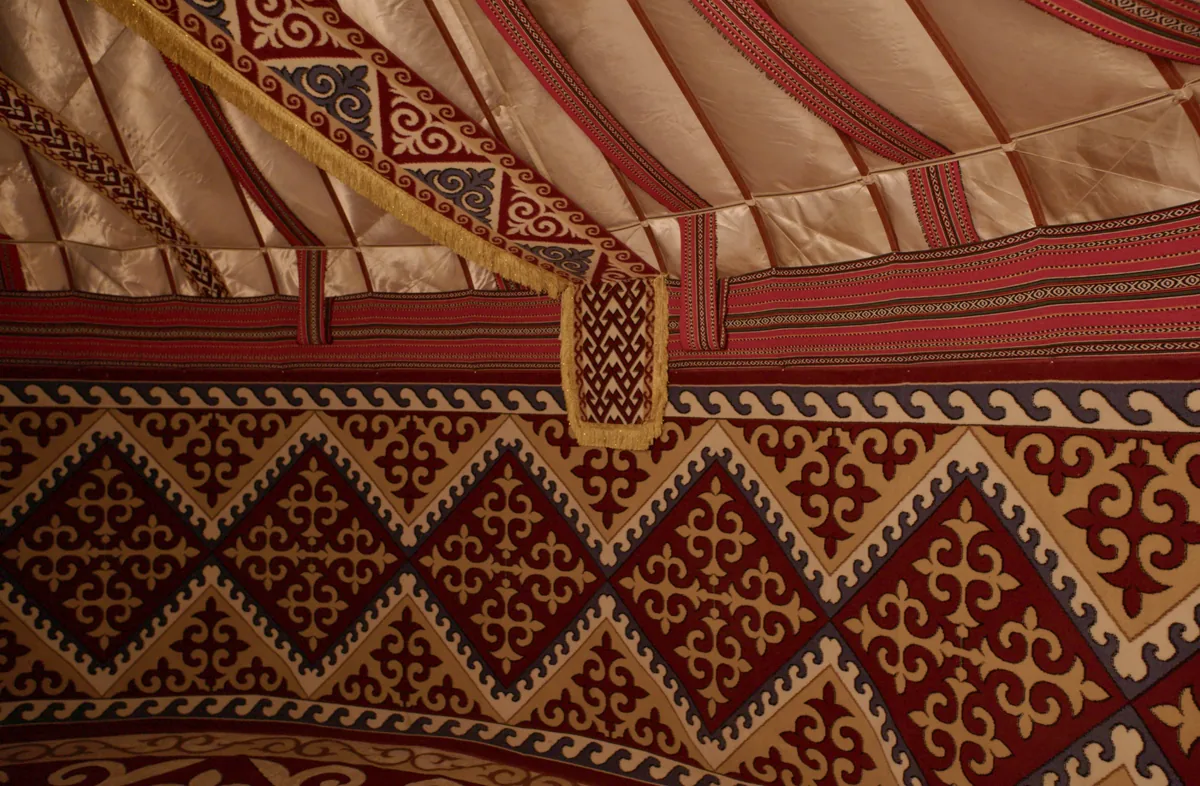
Caption: Gaukharbek Kunkhozhayev, yurt
Photo: Kristoffer Bübeck, Turkistan, Kazakhstan, 2025
Baskur: the bands that bind beauty and structure
Some of the most intriguing textiles are not carpets or wall hangings. They are the woven strips and bands that form part of the yurt’s construction and visual identity.
In his study of patterns along the Silk Road, German Kim focuses on the Kazakh baskur: a decorative woven band used in a nomadic dwelling (Kim, 2024). It is both useful and ornamental. It belongs to the practical arrangement of the yurt, while its visible pattern becomes part of the experience of being inside.
The scale is easy to overlook. These are not simply ribbons added for effect. A long woven band requires planning, material preparation, technical knowledge and steady labour. Its design must work not only when viewed close up but also when stretched across the curved or circular space.
The baskur reveals something fundamental about the yurt: function and beauty need not be separate. A textile can help organise or secure the architecture while contributing colour, rhythm and identity.
A portable home brings together many kinds of making.
See how örmek weavers make an alasha carpet
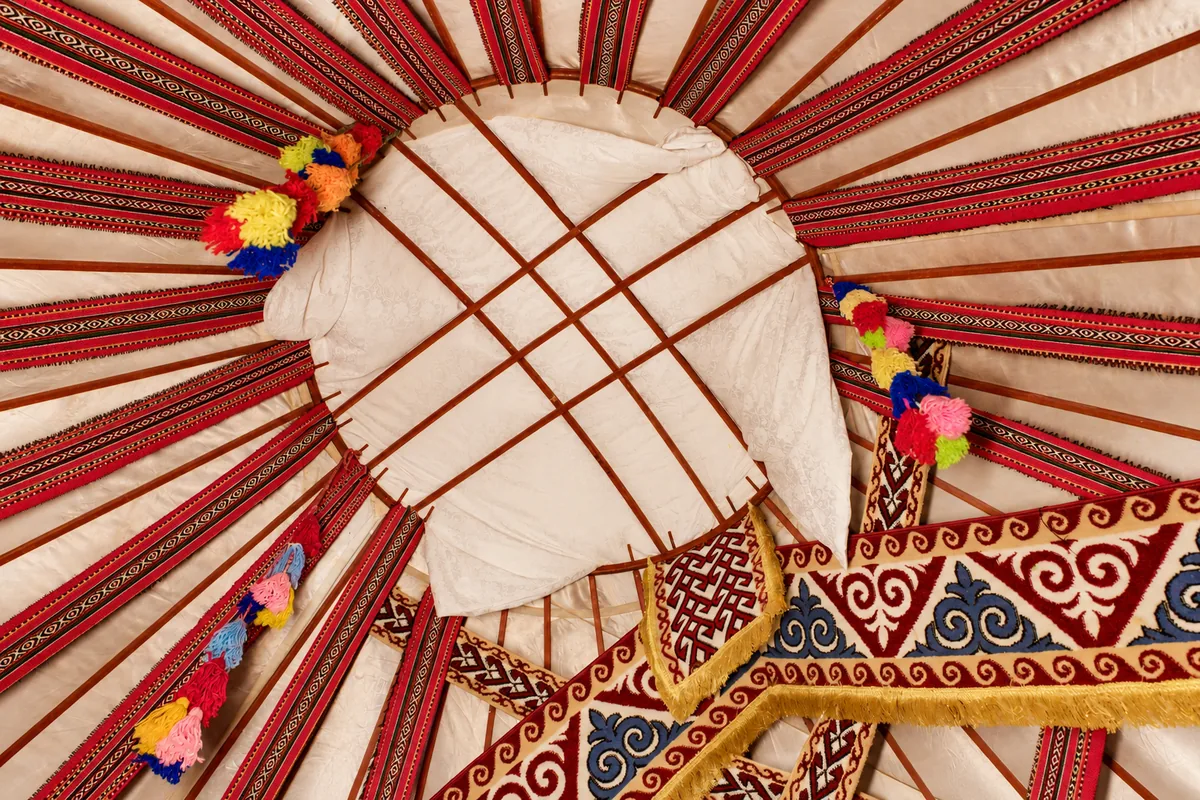
Caption: Gaukharbek Kunkhozhayev, yurt
Photo: Kristoffer Bübeck, Turkistan, Kazakhstan, 2025
The floor, the walls and the social space
A yurt does not function as a set of disconnected display surfaces. Its floor coverings, wall hangings, bands, cushions, chests and domestic objects work together to create a place where people can gather.
The floor is particularly important. Textiles bring warmth and soften the space for sitting, conversation, meals and rest. Walls may be enlivened by ornament and possessions. Objects can be stored, used, folded or moved according to the needs of daily life.
The arrangement is practical, but it can also feel visually complete. Curved forms repeat across different materials. Borders frame one object and echo another. A woven band above may speak a different graphic language from the carpet below, yet both contribute to the room’s character.
The yurt is more than a shelter furnished with beautiful things. Its textiles help make the interior usable, meaningful and recognisable.
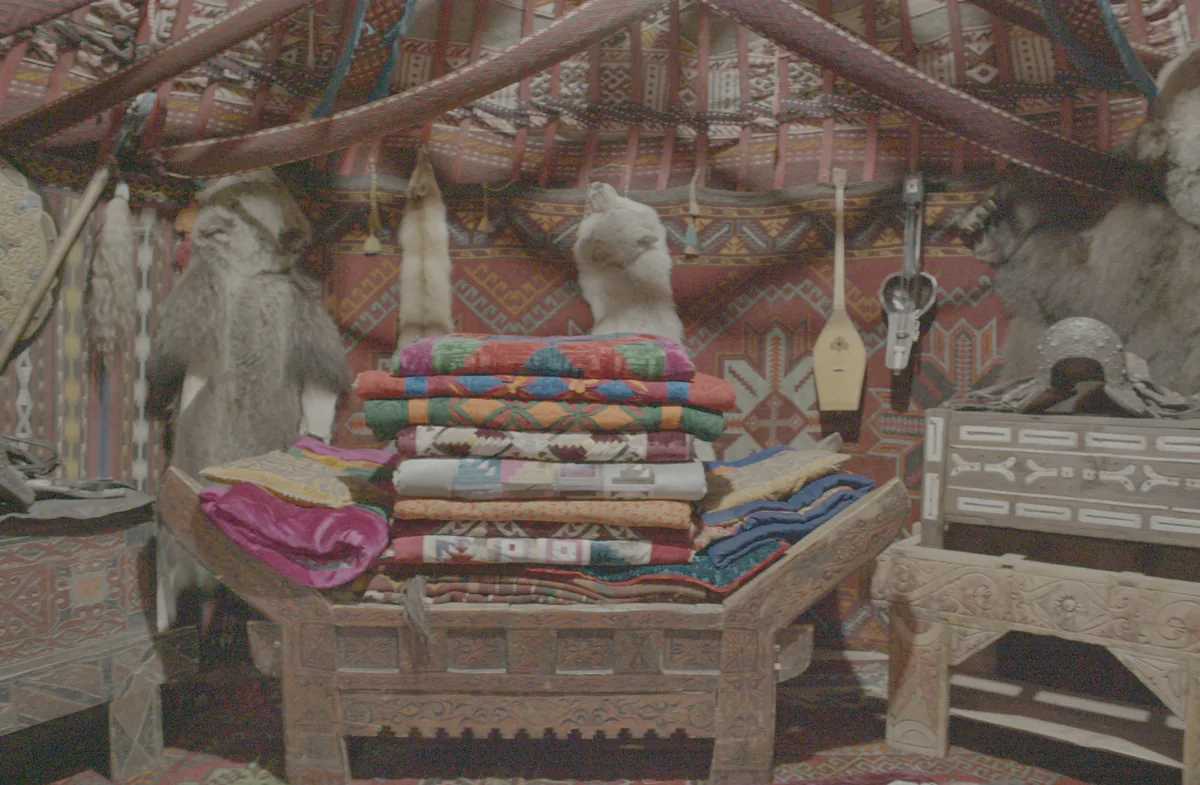
Caption: Berik Alibai House Museum, yurt
Photo: Kristoffer Bübeck, Astana, Kazakhstan, 2025
The knowledge behind the objects
When a textile is presented in a museum or photographed for a design publication, it is easy to forget the time behind it.
Embroidery takes patience. Felt-making requires physical knowledge. Weaving a long, consistently patterned band demands planning and concentration. Skills can be learned through watching, practice and work undertaken with others.
Portisch’s account shows how, in one community, the work of embroidering wall hangings could involve relatives and shared learning, as well as responses to material scarcity (Portisch, 2009). This reminds us that craft traditions are not static recipes. They can involve innovation, substitution and personal decisions.
A piece of felt or embroidered fabric is therefore evidence not only of a design, but of skill applied to a material under particular circumstances.
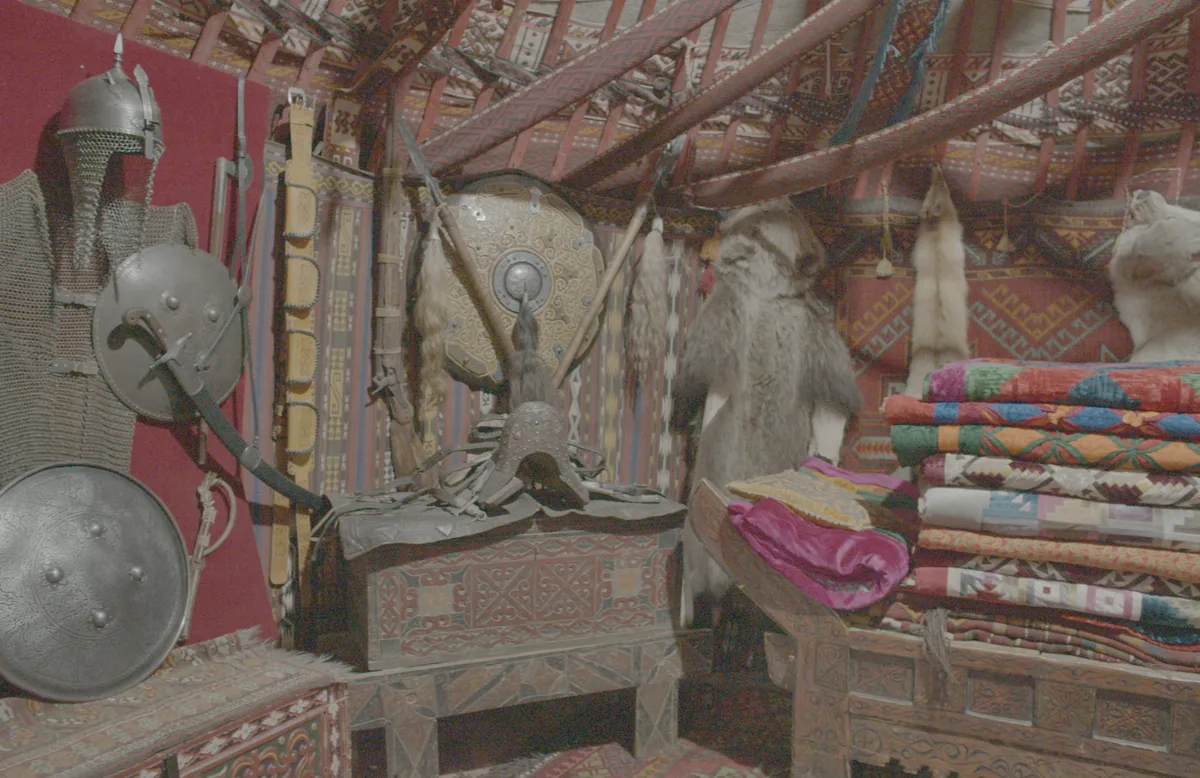
Caption: Berik Alibai House Museum, yurt
Photo: Kristoffer Bübeck, Astana, Kazakhstan, 2025
Why these textiles matter today
The yurt is a recognised emblem of Kazakh cultural history, but felt, embroidery and ornament also belong to contemporary creative life. Artists, artisans and designers adapt familiar materials and forms for clothing, interiors and new objects.
That does not mean every modern design uses inherited forms in the same way. Some makers work to maintain established methods. Others change scale, colour, material or purpose. Understanding both approaches is more useful than treating tradition as a single unchanging style.
A 2022 study by Almira Naurzbayeva and Aman Ibragimov explores contemporary Kazakh craft through ethno-symbolism, demonstrating that inherited forms can continue to shape questions of cultural identity (Naurzbayeva and Ibragimov, 2022).
For artists and designers, the yurt’s textiles offer more than visual inspiration. They show a practical relationship between making, environment, mobility and the social life of objects.
How to experience a yurt as a traveller
When you enter a yurt, begin with the whole room. Notice how the circular structure contains the objects and textiles within it.
Then look down. Which floor coverings are made from felt? How are their patterns formed? Can you see the difference between colour embedded in felt and pieces cut or stitched together?
Look around the walls. Is a textile woven, embroidered, felted or printed? Is it an everyday object, a ceremonial piece or a later decorative addition?
Finally, look up. Notice the roof structure and the bands that connect, secure or ornament parts of the space.
Ask the maker or guide about object names and methods if someone knowledgeable is available. Seek permission before photographing people or their work. If you make sketches or use motifs in your own projects, keep a record of where they came from.
These small acts of attention change the experience. A yurt stops being only an iconic silhouette and becomes a lesson in materials, labour and design.
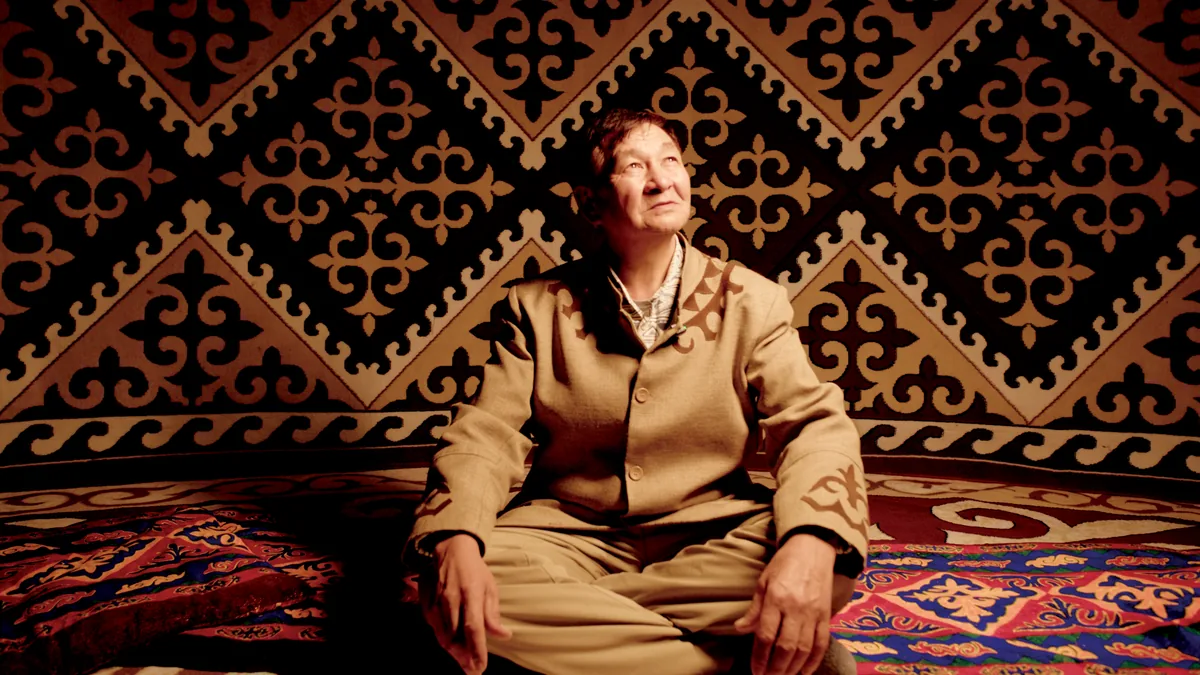
Caption: Gaukharbek Kunkhozhayev, musician & artist
Photo: Kristoffer Bübeck, Turkistan, Kazakhstan, 2025
Travel deeper with Atlas & Nation
Atlas & Nation is developing creative experiences in Almaty for travellers and creative practitioners who want to understand Kazakhstan through the people and processes behind its material culture.
Felt, weaving, embroidery and adornment are subjects best encountered with care for their context and the makers who practise them.
A yurt brings these strands together.
Felt becomes covering and floor.
Bands become part of the structure.
Embroidery becomes a presence on the walls.
Craft becomes part of home.
Explore the Fashion, Textiles & Adornment Creative Intensive →
Resources and recommended reading
This list brings together the sources cited in the article and additional background material consulted during its development. The Union’s project materials are unpublished and are listed for transparency rather than as a publicly available reading link.
Kazakhstan Union of Ethno-Designers (2026) ҚЭДО Лондон жобасы / London Project Materials. Unpublished project portfolio, PDF pp. 33–34 and 79.
Kim, G. (2024) ‘A cross-cultural perspective on ornamental serpentine patterns along the Great Silk Road’, Kulturní studia, issue 2/2024 (23), pp. 23–41. doi: 10.7160/KS.2024.230202. Available at: Publisher’s article page (Accessed: 22 October 2026).
Naurzbayeva, A. and Ibragimov, A. (2022) ‘Contemporary Kazakh Crafts in the Focus of Ethno-Symbolism: Methodological Aspects’, Central Asian Journal of Art Studies, 7(2), pp. 28–40. doi: 10.47940/cajas.v7i2.575. Available at: Read the journal issue (PDF; article begins on printed page 28) (Accessed: 22 October 2026).
Portisch, A. (2009) ‘The portrait: Kazakh embroidered wall hangings’, The Newsletter, 52 (Winter), p. 48. Available at: Read the article (Accessed: 21 October 2026).
Zhukenova, Z.D., Soltanbaeva, G.S. and Izhanov, B. (2016) ‘Traditional Felt in the Kazakhs Folk Art’, International Journal of Environmental & Science Education, 11(10), pp. 3719–3729. Available at: Read the paper (PDF) (Accessed: 22 October 2026).
Leave a Reply