
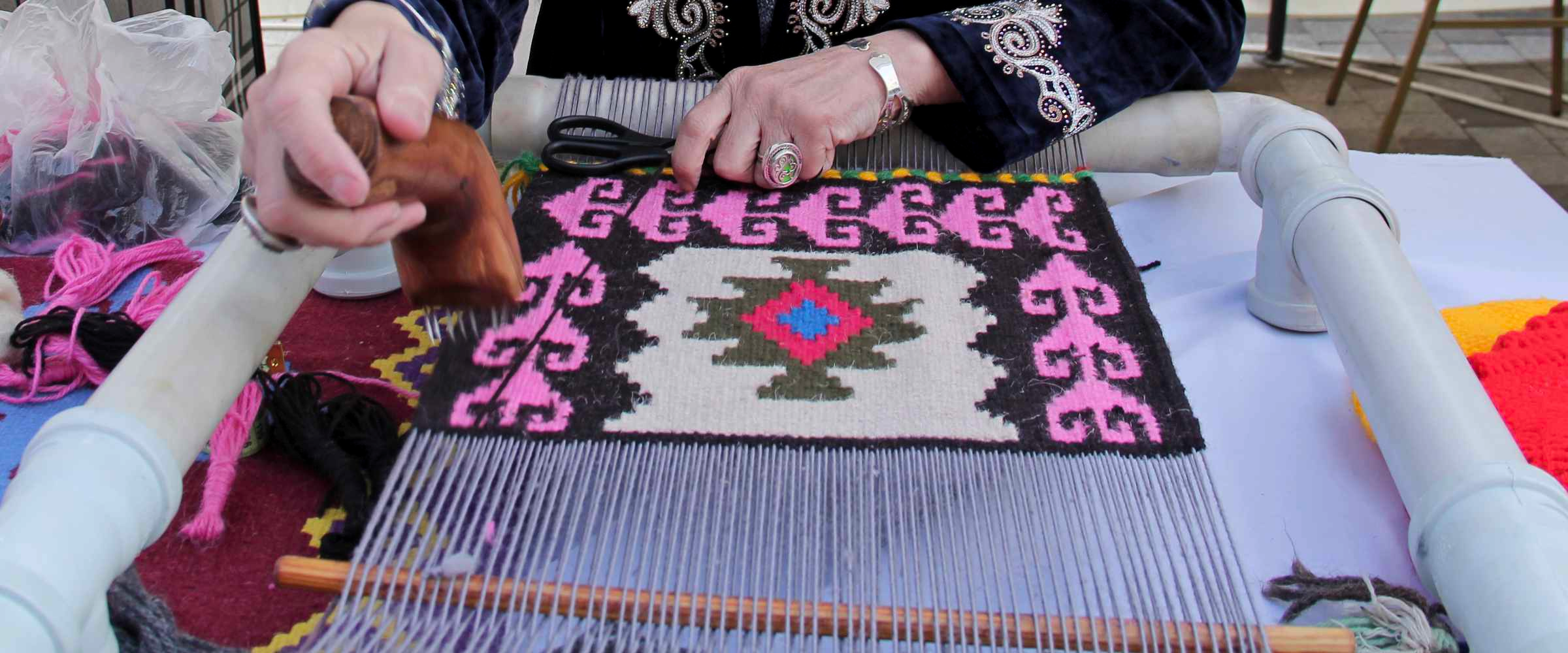
A weaving demonstration during Nauryz, 2024. Photo: Igor Ulitin · CC BY-SA 4.0 · Resized for web; cropped for the banner display.

KAZAKHSTAN · TEXTILES & MAKING
Örmek weaving: How eleven strips became one Kazakh carpet
In this story
What happens at the loom?The pattern is in the makingFollow the band around the yurtNext time you see a woven carpetStart with a Kazakh carpet nearly four metres long. Now look for the seams.
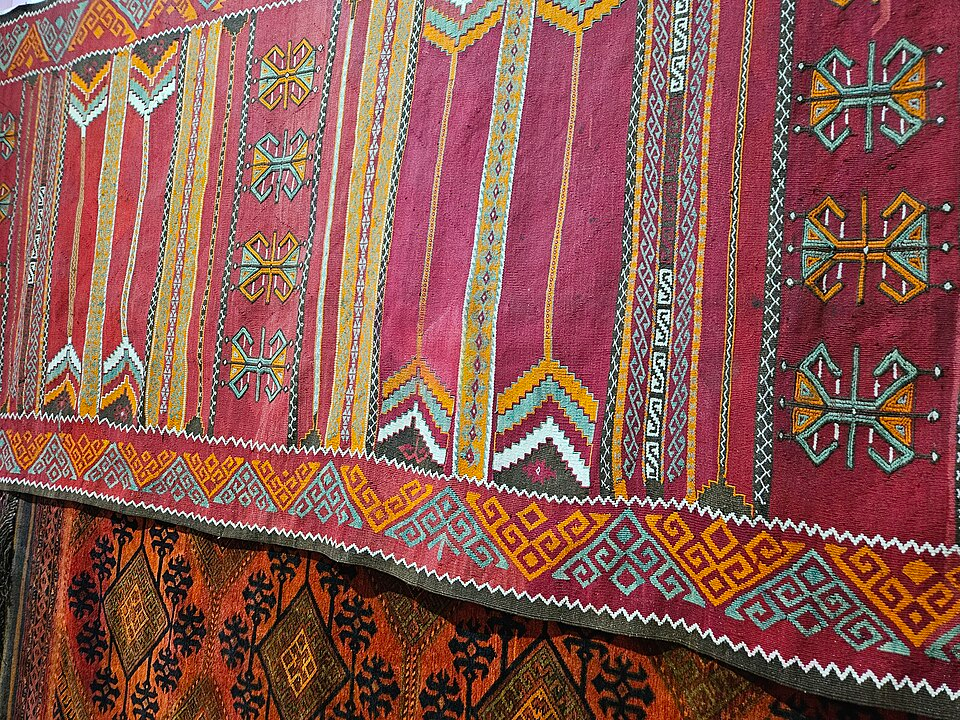
The National Central Museum of Kazakhstan records an alasha from Khantau, in the Zhambyl region, made in 1970. It measures about 180 × 390 centimetres and is stitched from eleven woven strips. There’s a design inside each strip, and another one that only appears when all eleven sit together. Imagine planning the whole carpet when your loom can only make one strip at a time, yes it sounds a little fiddly (National Central Museum of the Republic of Kazakhstan, n.d.).

What happens at the loom?
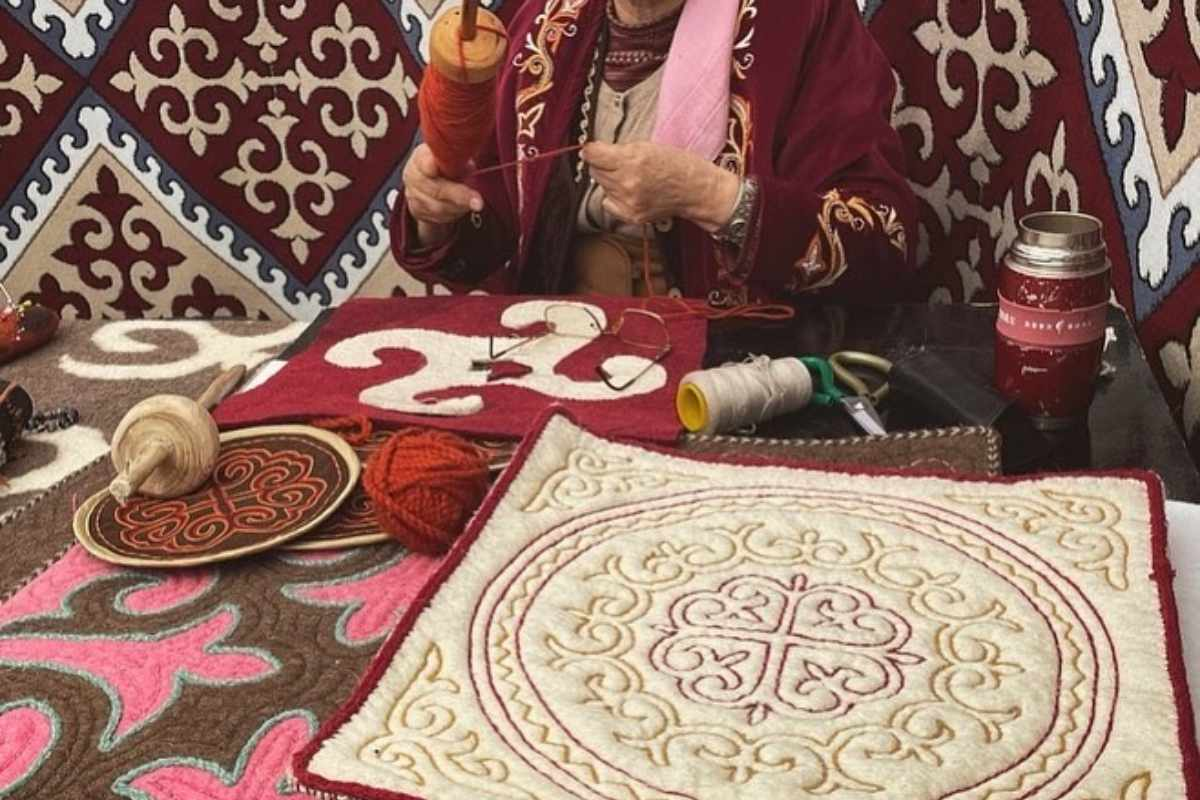
Örmek (өрмек) is a name for a traditional loom and the Kazakh weaving associated with it. Alasha is one kind of textile a weaver can make from narrow strips. A felt rug can share some of its shapes and colours, but it’s made quite differently (Alimbay, 2021; Altyn Kol, 2024).

If you’ve never used a loom, here’s the super duper quick version. The warp is the set of threads stretched lengthwise. The weft is the thread that travels across them. Lift selected warp threads, pass the weft through the gap, then press that row into place. Repeat. It starts to get exciting when you change which threads you lift or which colour goes through, I love a little drama between the threads. A small decision on one row can change the pattern you see several rows later, and hence your pattern turns into Gone with the Wind, just minus the moustache.
The pattern is in the making
The museum identifies the ornament on the Khantau carpet as terme. You may also come across names such as kezhim teru and orama. Published descriptions distinguish these approaches, but the words alone won’t tell you what every maker does at the loom. I’d want to see the next row being woven, then turn the strip over and look at the back (Institute of Culture, n.d.; Altyn Kol, 2024).
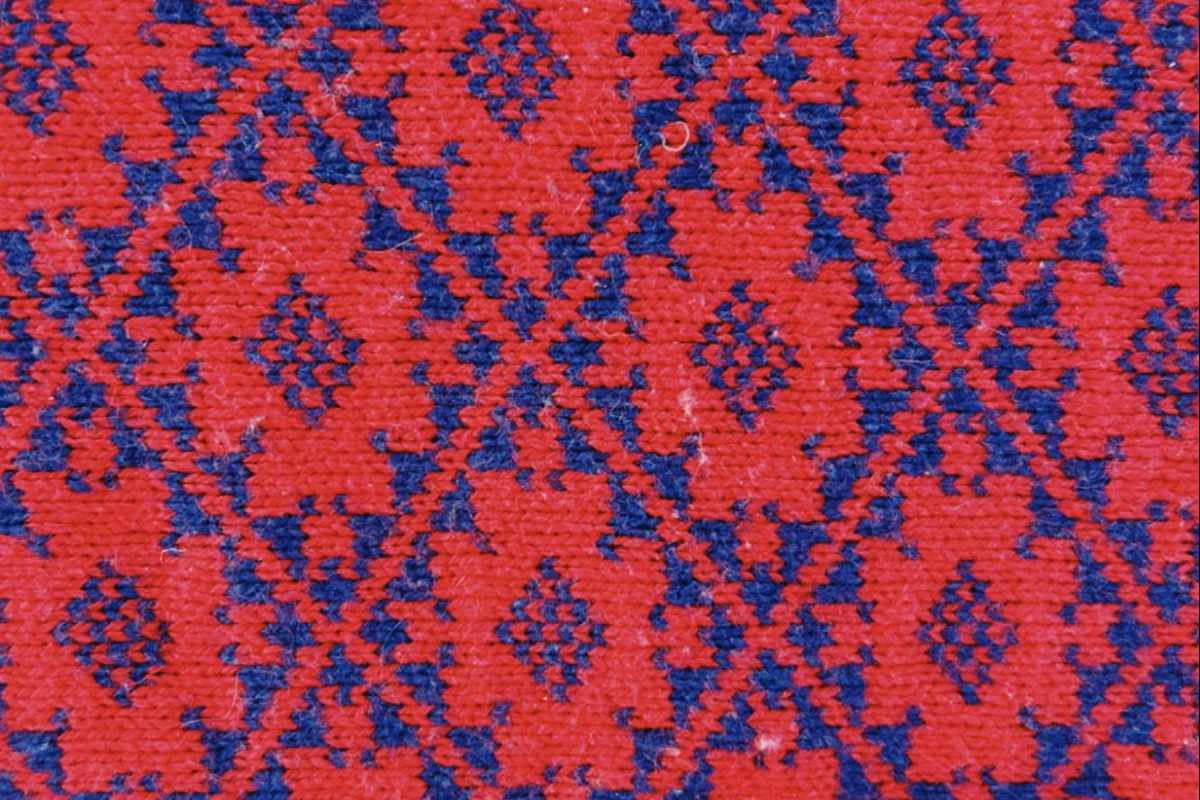
For those of you wondering if there’s any similarities in the UK, you’re in luck. There’s a pleasing parallel in Wales. Some Welsh blankets were made by weaving two narrow lengths and sewing them together. No shared origin is implied (I might be wrong, I couldn’t find one though); it’s the same practical question in a different workshop: how do you make something wider than your loom? (Lucas, 2020).
Follow the band around the yurt
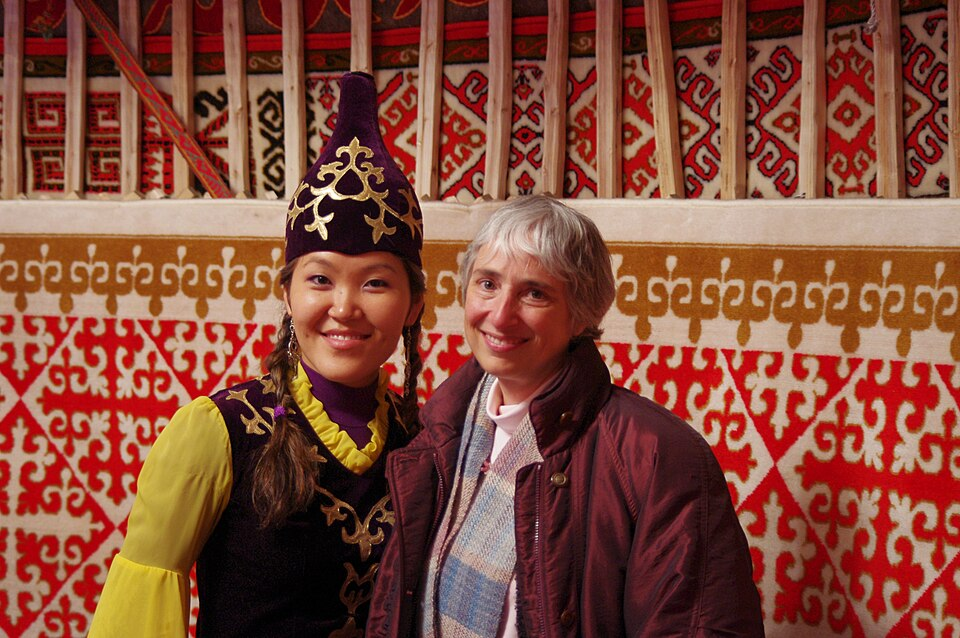
A woven strip doesn’t always have to join another one. Around a yurt for example, bands and ties have jobs of their own. Look for a broad patterned band called a basqur, then follow where it runs and where it’s attached. Seeing the band in place tells you something a close-up of the pattern can’t. UNESCO places weaving alongside spinning, braiding, felting and sewing in the knowledge needed to make yurts, while Kubel’s study traces changes in yurt textiles in Mangystau specifically (UNESCO, 2025; Kubel, 2019).

Next time you see a woven carpet
Look at an edge, then a seam. See whether the stripes line up or vary across the join. Ask who made it, where they learned and what they call the pattern. A familiar shape doesn’t necessarily carry the same meaning in every household or region (Alimbay, 2021).
And this is work people still do. The Smithsonian’s profile of Mereke Aidarsha describes a maker who prepares wool, dyes yarn, weaves and teaches. A finished carpet gives you the pattern; watching a maker decide what goes into the next row gives you the story, and who doesn’t like a story? (Ewald, 2024; Institute of Culture, n.d.).
Related story: Tekemet and syrmaq: Two ways to make a Kazakh felt carpet
Explore the Fashion, Textiles & Adornment Intensive in Almaty
References
Alimbay, N. (2021) ‘Traditional Kazakh carpets and carpet products: types, composition, semantics (materials of the Central State Museum of the Republic of Kazakhstan as a case study)’, Journal of Philosophy, Culture and Political Science, 74(4), pp. 55–71. Available at: doi.org/10.26577/jpcp.2020.v74.i4.06 (Accessed: 11 November 2026).
Altyn Kol (2024) ‘Traditional handwaving Alasha’. Available at: Read the source (Accessed: 11 November 2026).
Ewald, K. (2024) ‘Weaving Through Kazakhstan’s Cultural Heritage’, Smithsonian Folklife Magazine, 3 June. Available at: Read the source (Accessed: 11 November 2026).
Institute of Culture (n.d.) ‘Traditional Art of Kazakhstan’. Available at: Read the source (Accessed: 11 November 2026).
Kubel, E. (2019) ‘Textile decoration of the Kazakh yurt: history and modernity’, Journal of History, 91(4), pp. 138–144. Available at: doi.org/10.26577/JH-2018-4-309 (Accessed: 11 November 2026).
Lucas, M. (2020) ‘Welsh Blankets – Beauty, Warmth, and a Little Bit of Home’, Museum Wales, 5 May. Available at: Read the source (Accessed: 11 November 2026).
National Central Museum of the Republic of Kazakhstan (n.d.) ‘Alasha’, E-Museum Kazakhstan, object record: 1970, Zhambyl region. Available at: Read the source (Accessed: 11 November 2026).
UNESCO (2025) ‘Traditional knowledge and skills in making Kyrgyz, Kazakh and Karakalpak yurts (Turkic nomadic dwellings)’, Intangible Cultural Heritage. Available at: Read the source (Accessed: 11 November 2026).